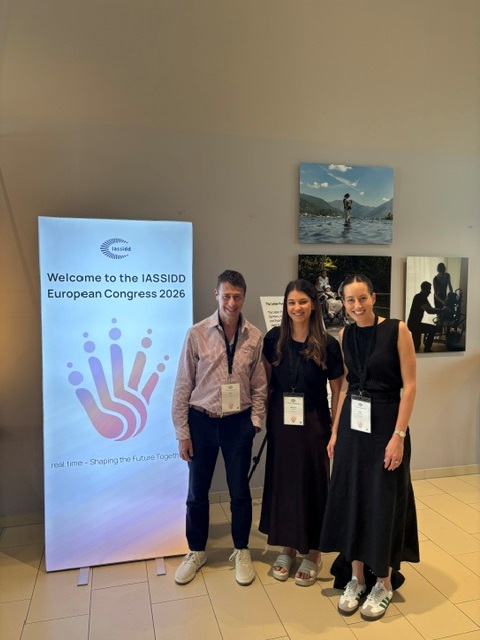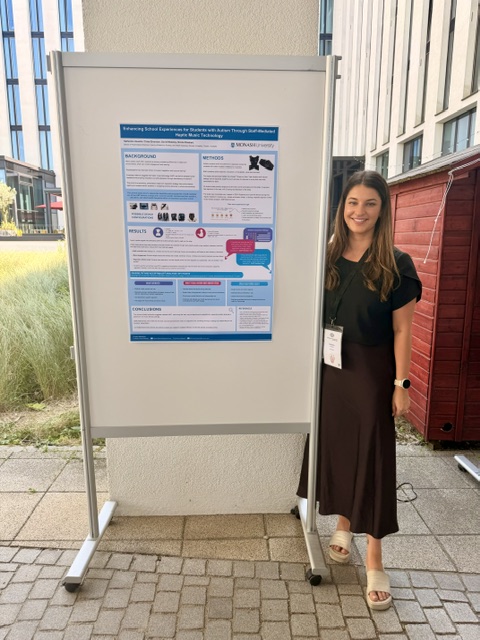
The annual International Association for the Scientific Study of Intellectual and Developmental Disability (IASSIDD) was recently held in Munich, Germany (from July 28- 31), where our own Dr Katherine Howells presented her research in a poster presentation (through her affiliation with Monash University). Below is the abstract from her research, which is currently under review at Acta Psychologica (co-authors: Katherine Howells, Chloe Emonson, David Moseley, Ana Mantilla, Elizabeth B. Torres, & Nicole Rinehart)
Abstract
Background
The use of haptic technology has expanded rapidly and is now used across contexts, including education and music. Haptic systems provide tactile stimulation and may support sensorimotor processing, a domain particularly relevant for autistic populations with diverse sensory profiles. Evidence supporting the use of haptic music technology in special education settings is promising but limited.
Research Question. Is staff-mediated use of two haptic music technology devices, the WoojerTM Vest and Strap, feasible and acceptable for autistic students and their teachers, educators, and allied health therapists in classroom and music therapy settings?
Methodology
Qualitative and descriptive data were collected from students aged 16-18 years and staff at a specialist school for children with autism located in Melbourne, Australia. Data were captured through staff surveys, student enjoyment ratings, staff checklists and observations, a semi-structured focus group, and a phone interview in this school-initiated pilot evaluation. Students were observed by staff using the devices over two non-concurrent two-week blocks.
Results
Thematic analyses suggest that the vest may be feasible, acceptable, and perceived as a regulatory tool, offering both calming and alerting input, depending on the student’s presentation. Staff reported the vest was used more frequently than the strap, although logistical limitations for both devices were mentioned (e.g., technical difficulties and time).
Conclusion
Staff-mediated haptic vest use demonstrates potential for providing regulatory sensory input to students with autism attending a specialist school. Controlled trials across diverse educational contexts are needed to establish efficacy and identify optimal candidate profiles.